There is a particular kind of grief that doesn’t announce itself with crying or with the immediate sense of loss you feel when something is taken directly from you. It is quieter than that, and in many ways more difficult to place, because it lives in the distance between you and the people you love, in the awareness that something has happened to them and that your safety does not protect you from the weight of that. Venezuela has been that kind of grief for many of us for a long time. A country that you carry inside you, not as a memory frozen in time, but as something alive and present, connected to the people who still live there, who still rebuild there, who still insist on staying.
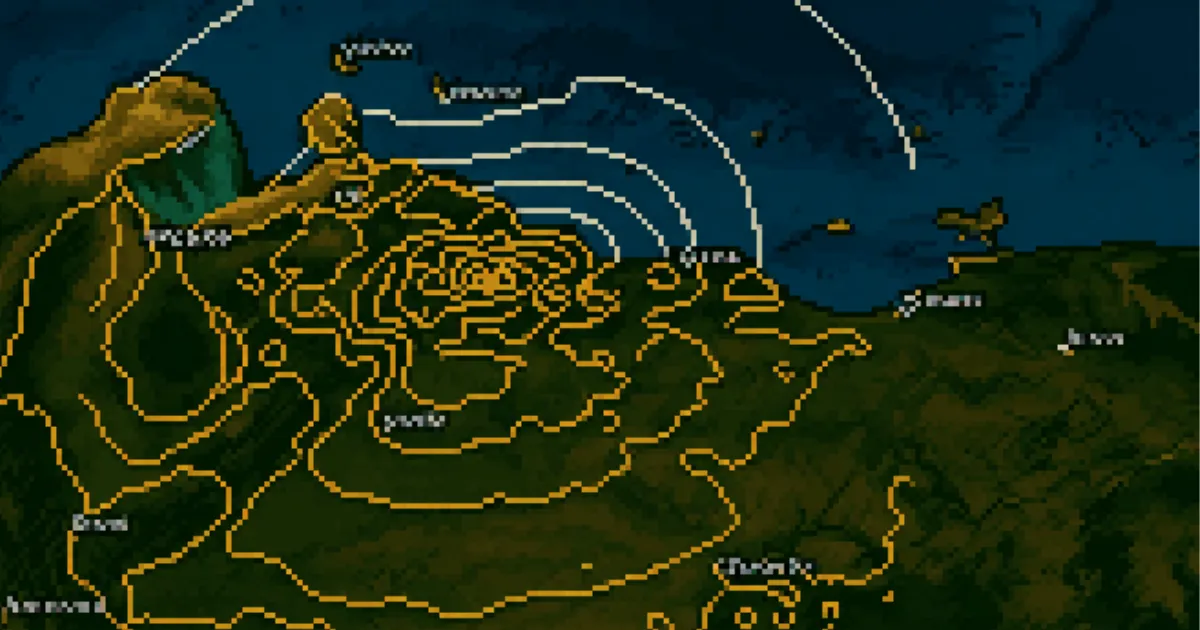
On June 24, 2026, two massive earthquakes struck northern Venezuela within 39 seconds of each other. A 7.2 magnitude foreshock, then a 7.5 mainshock, the largest the country has experienced since 1900. La Guaira, the coastal city that sits just ten miles north of Caracas, was declared a disaster zone. The capital itself shook. Buildings that had withstood years of everything else this country has been asked to endure came down. At least 235 people died and more than 4,300 were injured, and those are only the numbers we have confirmed. The aftershocks have not stopped, and scientists have noted that the fault responsible is similar in nature to the San Andreas, which means the risk is not over. The regions of Falcón, La Guaira, and Caracas were among the most severely hit, and I have been sitting with that since the moment I learned what happened, trying to find the right words for what it means to watch your country, a country that was already carrying so much, be asked to carry this too.
See what happened in La Guaira:
My family is okay. I want to say that clearly, because it matters, and because gratitude is real even when it coexists with something harder. The impact where I am was felt, but it was manageable. We came through.
And yet I have not been okay since this happened, and I think it is worth being honest about that rather than allowing the relief of being physically safe to silence what is genuinely there. When you love a country and that country is in pain, the pain does not respect the distance between your body and theirs. I look at the images from La Guaira and from Caracas and I think of all the faces I know from there, all the people whose lives I can imagine in those streets, the relatives I have not called in too long, the friends who stayed when others left, the neighbors whose names I still remember from a time that already feels far away. The randomness of who was hit and who was not is not a source of comfort. If anything, it deepens the ache, because it reminds you that it could have been anyone, that it may still be someone you know, that the full count of what was lost is still unfolding. There are stories still emerging, like a baby pulled alive from the rubble, that carry within them the whole weight of what this moment is.
This is what I mean when I say that grief at this scale is not only about the facts. It is about the relationship you have with the place and the people, and how that relationship makes everything that happens to them feel like something that is also happening to you, not in the same way, not with the same cost, but in a way that is nonetheless real and that cannot simply be set aside in the name of perspective.
But there is something else I have seen in these days that I want to speak to directly, because it matters just as much as the pain does. I have seen Venezuelans pulling each other out of the rubble with their bare hands. Neighbors carrying strangers. Communities organizing before any institution showed up, before any official response arrived, before anyone authorized them to help. People who have very little giving what little they have to someone who has less. Caracas Chronicles has been tracking the state of emergency and what is unfolding on the ground, and what stands out in every account is not only the destruction but the response: ordinary people doing extraordinary things in the space that opens when everything else fails. That image, that specific kind of human behavior, moves me in a way I find difficult to put into adequate words. That is the kind of society worth building toward, not the one that waits for the right conditions or the right moment, but the one that shows up in the worst moment, without being asked, because it understands that it has no other choice if it wants to remain human. Venezuela has always known how to do that, even when it has had no reason to have to.
Viktor Frankl wrote, after surviving conditions that most of us cannot fully imagine, the following:
“In some ways suffering ceases to be suffering at the moment it finds a meaning, such as the meaning of a sacrifice.”
I have returned to that sentence many times over the years, because it is one of the few things I have found that attempts to make sense of why suffering does not simply destroy every person it touches, why some people emerge from the darkest circumstances not merely intact but transformed in a direction that is, somehow, toward the light. What I have come to believe is that Frankl was right, but that the meaning he describes does not arrive on its own. It is not embedded in the disaster itself. It is something that gets built in the aftermath, through the collective decisions of the people who remain, through the choice to reach across rather than retreat inward, through the refusal to let someone face their devastation alone. The communities I have seen responding in Venezuela in these days are doing exactly that. They are, in real time, making meaning out of something that has no inherent meaning, by turning it into an act of solidarity that is as human as anything I have ever witnessed.
If you are reading this and you feel the weight of what has happened, I want to encourage you not to move past it too quickly. Empathy is not a performance and it is not weakness. It is the honest acknowledgment that what happens to other human beings is not entirely separate from what happens to us, that their suffering diminishes something in the shared world we all inhabit, and that acknowledging that is the first step toward doing something about it.
And if you are in a position to do something, please do. It does not have to be large. On the Venezuelan side, the Cruz Roja Venezolana, the Venezuelan Red Cross, is coordinating rescue efforts and assessment teams across La Guaira and Greater Caracas, even after their own headquarters in the capital sustained damage. They are on the ground and they need support. We Love Foundation is also operating directly inside Venezuela, providing food, water, medical support, and shelter supplies through a network that has been working with local communities for over a decade. Internationally, the UN Crisis Relief fund for Venezuela is operational, UNICEF is focused specifically on children and families, Direct Relief is mobilizing medical aid, and the International Rescue Committee has teams delivering urgent health and nutrition services. If you want a broader overview of how to help, ABC News has compiled a useful guide. And if donating is not possible right now, then share what is happening. Check on the Venezuelans in your life, the ones who left and still carry that country inside them, the ones who may have family they are not sure is safe. A message that says I am thinking of you is not nothing. In a moment like this, it is a hand extended across whatever distance separates you, and sometimes that is precisely what someone needs to keep going.
We cannot undo what happened. We cannot give back what was taken. But we can refuse to let people face it alone, and that refusal is, I think, the beginning of everything that matters.
To every soul lost in this earthquake: I hope there is rest. Not the unresolved rest of something left unfinished, but the kind that comes when everything that needed to be carried has finally been set down. Peace, for people who deserved far more peace than this life gave them. Your absence is felt. You are not forgotten.
And to those left behind, who are rebuilding again, who are finding the will to continue in circumstances that would break many of us: I see you. We see you. You are not carrying this alone.